
The Song of the Flight, or the Song of Exile as it is alternatively known, was a poem that was written by Nezahualcoyotl or Fasting Coyote, an architect, scholar, philosopher, poet, artist, warrior, and governing ruler of the pre-Columbian city-state of Texcoco, located in the present-day Valley of Mexico. In it, he writes:
In vain I was born.
I wish I’d never been born, truly that I’d never come to earth. That’s what I say. But what is there to do? Do I have to live among the people? What then? Princes, tell me!
Do I have to stand on earth? What is my destiny? My heart suffers. I am unfortunate. You were hardly my friend here on earth, Life-Giver.
How to live among the people? Does He who sustains and lifts men have no discretion? Go, friends, live in peace, pass your life in calm! While I have to live stooped, with my head bent down when I am among the people.
For this I cry, feeling desolate, abandoned among men on the earth. How do you decide your heart, Life Giver? Already your anger is vanishing, your compassion welling! I am at your side, God. Do you plan my death?
Is it true we take pleasure, we who live on earth? Is it certain that we live to enjoy ourselves on earth? But we are all so filled with grief. Are bitterness and anguish the destiny of the people of earth?
The poem chronicles Nezahualcoyotl’s early adolescent life, which the then-young prince had spent in exile after his kingdom was overthrown in a rival governor’s coup. Despite being born heir to the kingdom, his father had pitted Texcoco against the mighty city of Azcapotzalco, much to the dismay of the ruling rival tribe, the Tepaneca. After being pursued by enemy forces into the wilderness, Nezahualcoyotl’s father, Ixtlilxochitl, decided to surrender himself and instructed his son to hide underneath a nearby fallen tree. It was on this night in the year 1418 when Nezahualcoyotl was forced to watch helplessly in horror as his father was stripped of his regalia and brutally executed. He was but a mere 15 years old at the time.
Whenever I’ve taken the time to reflect upon Latin America’s tumultuous past, I frequently recall this poem and the Hamlet-like story behind it as a broad symbolic evocation of its formative history. Children whose innocence is pilfered from them by vast political machinations beyond their control or comprehension and whose chances for a life beyond the chains of despotism. It is Latin America, a continental region teetering within the peripheral limbo of Western Civilization and the Global South that, despite its vast material resources, is often condemned to abject poverty and desocialization. Over the last three decades, Latin America has become the world’s most extensive exporter of agricultural commodities. Its GDP growth has been rapidly outpaced by the U.S., and this gap will likely continue to expand over time. Much like its position in global trade, Latin America’s inequality has fluctuated aggressively over time.
Latin America is widely considered the most unequal region in the world, with the top 10% earning 12 times more than the bottom 10%, compared to an average ratio of 4 in industrialized nations. At the same time, one in every five Latin American citizens is impoverished and crippled by persistent food insecurity. While the role of conquest and colonial institutions such as slavery have played an early determining factor, conquest and slavery are as old as Methuselah and have long since faded from history along with the region’s copious Indigenous roots. However, there is no country in Latin America and the Caribbean where the legacy of slavery is more prevalent than the island nation of Haiti.
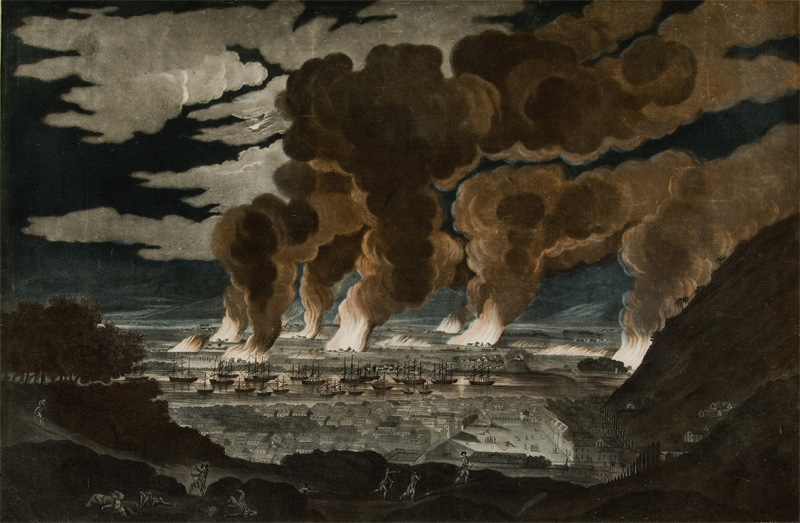
Haiti, rich in raw resources, bauxite, gold, and copper deposits, is simultaneously the poorest sovereign nation in the Western Hemisphere and among the poorest globally. It is a relatively young country, the second oldest in the West after the U.S. Formally known as Saint-Domingue, Haiti shares a strong commonality with the U.S. and a tightly intertwined history, as Haiti was born out of the smoke and fire of revolution. In 1791, the first successful large-scale insurrection by enslaved people in modern history shook the Western colonial world. The cost of Revolution had already devastated the economic infrastructure of Haiti. During their first century as a nation, the French King, Charles X, sent a fleet of armed warships to Haiti, demanding that Haiti pay 150 million francs as compensation to slaveowners.
This debt would not be fully paid until over 100 years later, in 1947, after the developing Haiti had paid France 560 million in modern US dollars. If Haiti had been able to invest that 150 million, it would be worth 115 billion today.
The U.S. Government pursued an interventionist policy to isolate Haiti diplomatically and restrain it economically, fearing that its success would inspire similar slave rebellions in the U.S. Throughout the 19th century, the U.S. Government refused to recognize Haiti diplomatically and continued to import Haitian agricultural goods while exporting its goods, with unfavorable trade policies.
Haiti’s troubles continued early into the 20th century with the military occupation under President Woodrow Wilson. Shortly after the assassination of Haitian President Jean Vilbrun Guillaume Sam, the US Marine Corps was deployed to establish order and stability in Haiti. However, this ended up having the opposite effect. The U.S. military occupation of Haiti would eventually lead to the erosion of local governance, economic destabilization, and the deaths of over 11,000 Haitians.
The presence of U.S. military operations doesn’t end with Haiti, between 1898 and 1994, the United States interfered effectively to alter governments in Latin America at least 41 times. This equates to once every 28 months for the whole century. According to the Migration Policy Institute, the number of Central Americans born in the United States has increased more than tenfold since 1980 and by 25% since 2010. During the Great Export Boom of the mid-19th century, rural oligarchies continued to dominate Central America until the 1970s, despite efforts from urban workers and the middle class to reduce their dominance.
Towards the end of the 20th Century, Central America was embroiled in several civil wars that lasted for decades. Most of these armed conflicts were instigated by foreign intervention during the Cold War. The US and USSR would continuously provide funding, equipment, and training to Central American troops. According to investigative journalist, national security advisor, and former chief of the United International Press Bureau, Douglas Farah, the U.S. played a critical role by training and supplying weapons to Guatemalan security forces that slaughtered thousands of civilians during the 1960s.
Based on Farah’s investigation and declassified intelligence records, we also know that when the Guatemalan army and its paramilitary allies massacred hundreds of thousands of people, the CIA maintained firm contact with the military, and U.S. authorities were fully aware of the numerous human rights abuses and atrocities that had been taking place. Throughout Guatemala’s 36-year civil war, more than 200,000 people were killed, over 600 villages were destroyed, 1.5 million were displaced, and more than 150,000 were forced into Mexico by the military.
During the 1980s, El Salvador became the site of some of the greatest atrocities in Latin American history, funded by the U.S Government through organized regime changes facilitated by dictators and death squads. El Mozote, a small rural village in El Salvador’s Morozán department, was attacked by the Salvadoran military on December 10, 1981. Salvadoran military forces would burn houses and animals, they would separate men from women and children, and systematically execute each group. According to the Center for Justice and International Law, nearly one thousand people would be tortured, raped, and massacred, with almost half of the victims being minors.
According to the Migration Policy Institute, the number of Central Americans residing in the U.S. more than tripled during the 1980s, primarily due to civil wars and political instability. From 1980 to 2015, the size of the Central American immigrant population rose tenfold. As a response to this rapid influx, the U.S. Government has exponentially increased the size and scope of military operations at the southern border.
Beginning in the 1980s, as the Reagan administration began to broaden the “War on Drugs” and inserted the armed forces into federal law enforcement’s counter-drug operations at the border, the military’s law enforcement responsibilities began to carry over, first informally and then officially, into the field of immigration enforcement. Since then, presidential administrations from both of the 2 major political parties began deploying thousands of troops to the border in the 21st century as anti-immigrant sentiment has increased among significant segments of the American populace. With Operation Jump Start in 2006, President George W. Bush started the trend of large-scale deployments, which has expanded throughout the Obama, Trump, and Biden administrations.
The US immigration system has been the subject of criticism and contention for some time. Many have argued that if people want to emigrate to the US, they should do so legally. Of course, with any country, if you were to enter it unlawfully, you would be subject to deportation. This is true for most countries around the world, but our immigration system is unique in that it is highly restrictive and unable to meet the current demands of immigration. According to the CATO Institute, Congress has not modified lawful immigration quotas since 1990. Since then, the United States population has expanded by 30%, while the GDP has doubled. As a result of these low immigration quotas, many people have to wait in long lines to immigrate, some for several decades.
A key area of public contempt surrounding the US southern border is the conditions of migrant detainment facilities, which saw a rapid rise in media attention during the Trump administration amid the advent of the Zero Tolerance Policy in 2018. The reality is that the issues surrounding the border have been prevalent for quite some time, and the living conditions of these detainment facilities have drawn disdain from various human rights organizations.
In 2021, Human Rights Watch obtained documents detailing at least 160 cases of abuse by US Customs and Border Protection officers, Border Patrol agents, and ICE officials against migrants at the border, including physical abuse, unlawful coercion, molestation, and sexual assault on migrant detainees. In 2019, CBP agents withheld meals from a detainee in freezing cold temperatures until he consented to sign a document that he could not read or understand. In 2017, A teenager was coerced into taking off her clothes by a Customs and Border Protection official, after which she was sexually assaulted. And since 2015, employees of Southwest Key, a private facility for unaccompanied minors, have sexually abused and solicited nude images of children, according to a civil rights lawsuit filed by the Department of Justice in July of 2024. The lawsuit was eventually dropped in March of 2025 under the Trump administration.
I ask then, dear reader, to what end do we maintain our position as the most militarily and economically dominant empire on the global stage? My intention with this piece was never to condemn American identity as an expression of patriotism. We should all be reminded that it was Benjamin Franklin, the man who vehemently opposed the use of land ownership as a prerequisite to voting, refused to grant unlimited veto power to the president, recommended impeachment as a remedy for improper conduct, and wrote the words, “It is the responsibility of every citizen to question authority.”
America as a state is not alone in its sins; we have decimated small developing nations and waged war across the globe while our fellow countrymen have marched for our civil rights, cured disease, explored the cosmos, and upended the tyranny of fascism. When my father first became a naturalized citizen, he embraced it with a sense of awe and pride that, at times, I looked upon with confusion and envy. As a native-born citizen, I’ve never had to bear the weight of leaving behind a home, a family, a language, or a culture to rapidly adapt to living in an unfamiliar place. I’ve spent my life enveloped within the comfort and security of an empire that has exalted itself above the thousands of lost souls, pining to be free. The naked knowledge of the contrast between the conditions of Latin America and the U.S. has informed the ethos of my writing. The violations of dignity and human rights, the systematic mechanized murder of countless human beings, globalized exploitation through trade and resource extraction, and the implementation of military might on our southern border.
My only hope is that I’ve potentially opened the door to a new understanding of our place in the world and the consequences of our government’s reckless clamor for power and control, not out of disdain or contempt for the homeland of my fellow countrymen, but as a proud American citizen, one willing to stake their life in the struggle for justice and freedom.
 The Scoota Zone